
Europa: Ice Moon of Jupiter
 |
Jupiter and the Galilean Satellites Top to bottom: Io, Europa, Ganymede, Callisto Credit: NASA/JPL/DLR (Public Domain) |
Discovery of Europa and the Galilean Moons
Europa, an ice moon of the giant planet Jupiter, looms large in the Solar System. Only five other moons in our Solar System outsize Europa; three of them join her in orbit around Jupiter. Italian astronomer Galileo Galilei first witnessed Europa over 400 hundred years ago on January 8, 1610. Unleashing one of the great controversies of the period, Galileo famously discovered a Jovian system of orbiting moons, including Europa. Coincidentally, this occurred within a very short time of Europa's discovery by another famous astronomer, Simon Marius. Subsequently, each astronomer held firm in a debate over who first cast their sight upon the moon. Ultimately, Galileo first published his discovery. Galileo named these moons "Cosimo's stars", as an homage to Cosimo II de' Medici, Grand Duke of Tuscany.Marius was a German astronomer with highly respected skills of astronomical observation. He we went on to describe the orbits of these moons with more precision that Galileo. Marius discussed his discovery of the Jupiter moons with another famous astronomer of the time, Johannes Kepler. They decided to name these four moons after mythological lovers of Zeus (the Greek equivalent of Jupiter). The world astronomy community accepted these names, despite protests from Galileo and the names have held ever since. In order from smallest to largest, the Galilean satellites are: Europa, Io, Callisto, and Ganymede.
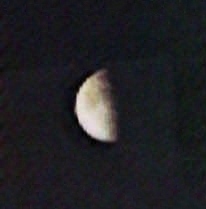 |
| Europa, still an enigma. Pioneer 10 in 1973 Credit: NASA (Public Domain), via Wikimedia Commons |
Detailed Views of Europa Emerge
 |
| Europa: Galileo spacecraft 1996 Credit: NASA/JPL/DLR (Public Domain), via Wikimedia Commons |
The Pioneer 10 spacecraft, launched in 1972, started things off. Pioneer 10 offered up a tantalizing image of Europa, sorely lacking in detail. Astronomers glimpsed a highly reflective surface, with an albedo similar to that of ocean ice. Europa, in fact, shines among the brightest of moons in our Solar System. (The brightest moon, Enceladus, the ice moon of Saturn, reflects nearly one hundred percent of incident sunlight.)
Pioneer 10 produced a treasure trove of information about Jupiter and its satellites. However, Europa was not the primary target. Most of what we now know about Europa derives from the accomplishments of an expedition launched in 1989, the Gallileo mission. Meanwhile, the Hubble Space Telescope detected stunning evidence of water vapor plumes. We have seen other hints of a complex, teeming subsurface world of Europa. More than some far fetched fantasy, there is a reasonable suspicion that Europa might harbor simpler forms of extraterrestrial life. Future missions to Europa are in the works, including the Europa Clipper. This mission, set to launch around 2022, will include multiple flybys, and even more exciting, a landing craft.
Ice Moon Station will publish more on Europa, Pioneer 10, the Gallileo mission, and upcoming missions in future posts. Subscribe by Email, or follow us on Facebook and Twitter for updates.

No comments:
Post a Comment