
Pioneer 4 space probe launched in 1959 to explore the Moon
 |
Pioneer 4 satellite launch aboard a Juno II rocket on March 3, 1959 Credit: NASA-MSFC (Public domain) |
The mission was not a complete failure, as the spacecraft successfully measured belts of radioactivity trapped in Earth's outer atmosphere. These Van Allen belts, named after American astrophysicist John Van Allen, derive primarily from charged particles in the solar wind, trapped by Earth's magnetic fields. Pioneer 3 found 24 such radiation belts around the Earth.
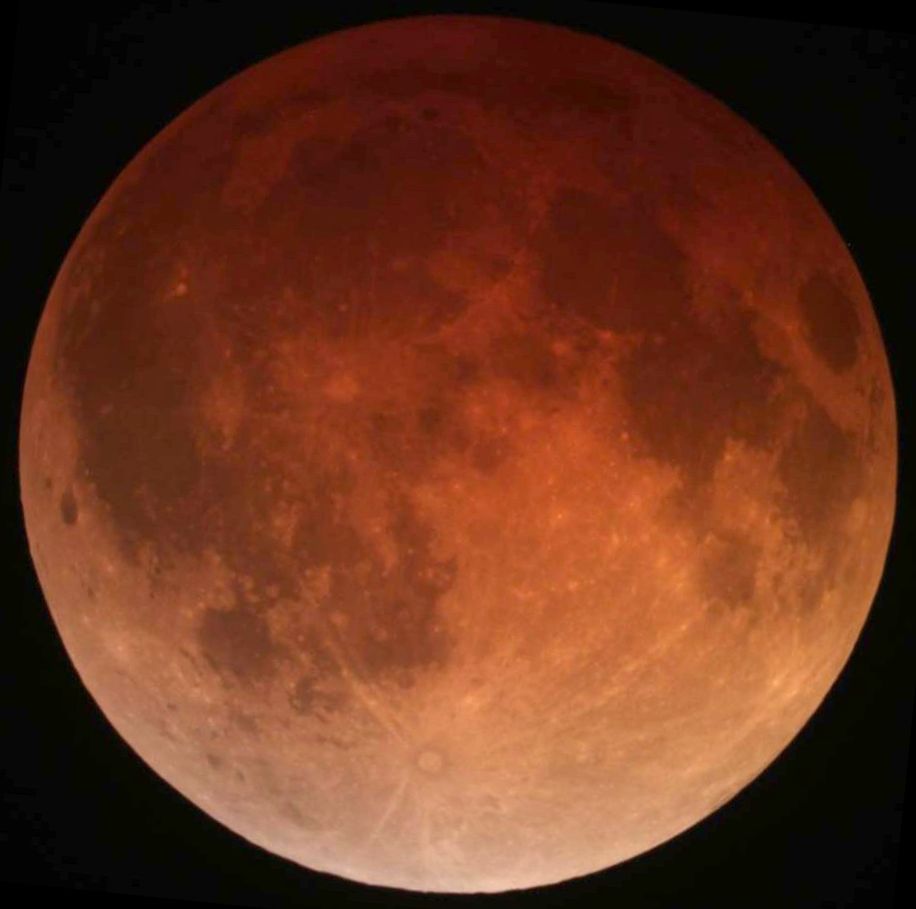 |
| Credit: Alfredo Garcia, Jr (CC BY-SA 4.0), via Wikimedia Commons |
Finally on March 3, 1959, the United States scored a win with the successful launch of a Juno II rocket carrying Pioneer 4 from the launch facility at Cape Canaveral. Pioneer 4 would become the first artificial satellite placed in orbit around the sun and the United States' first exploration beyond Earth. Pioneer 4 would go on to track more distance than any object made by people up to that time.
The Pioneer 4 spacecraft design
 |
| The Pioneer 4 spacecraft under inspection on March 1, 1959 Left-to-right: Werner von Braun, John Casani, and James Van Allen Credit: NASA (public domain), via Wikimedia Commons |
Considering the size of the massive rocket required to get the job done, the craft itself weighed a mere 13 lbs, about as much as a Shih Tzu dog. A thin fiberglass shell encased Pioneer 4, painted with white stripes to maintain temperature within a functional range in the harsh environment of interplanetary space.
Coated in gold, with a pointed tip, the entire Pioneer 4 spacecraft functioned as an antenna to maintain communication throughout the mission. Technology constraints of the era made it impossible for the craft to use solar panels to generate power, which were standard on later satellites and probes.
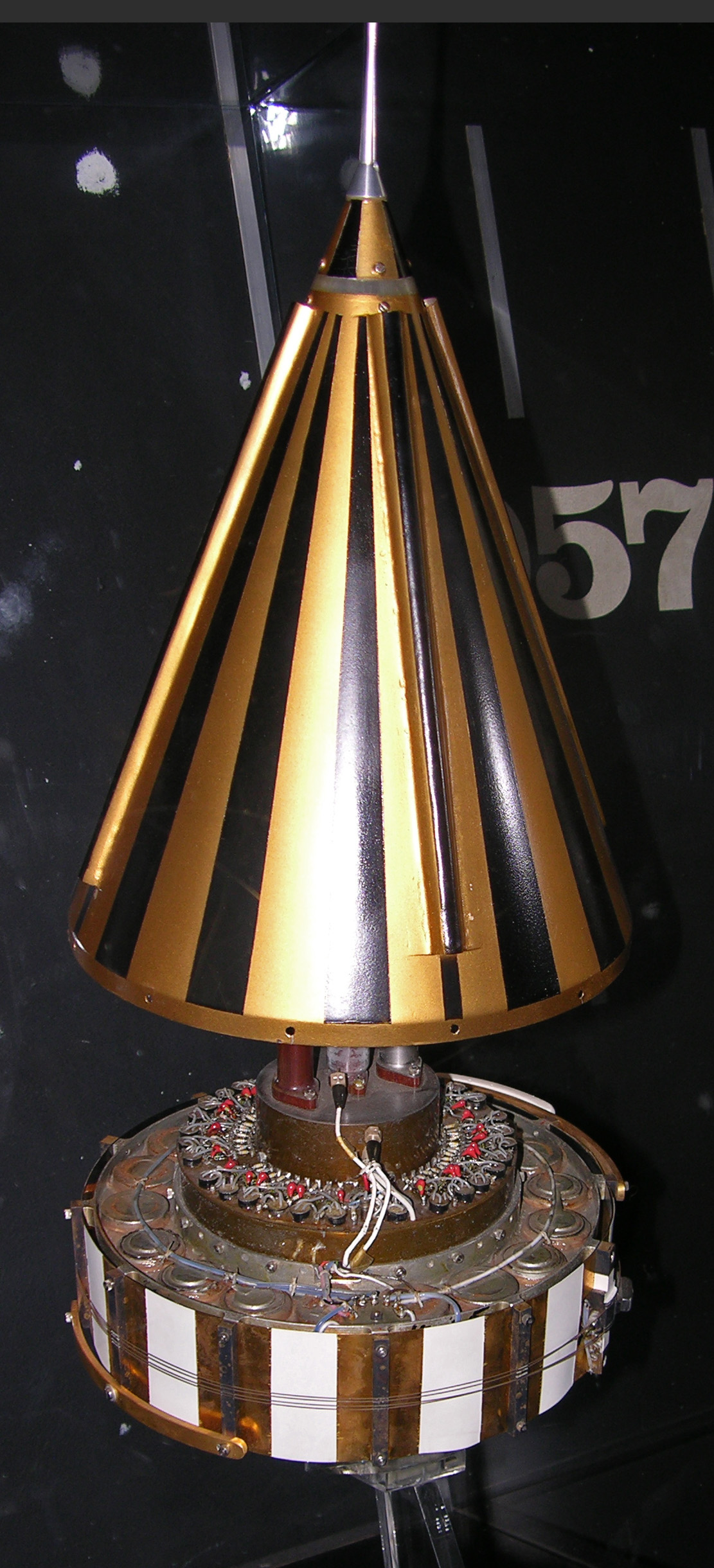
Pioneer 4 ran on mercury batteries: a ring of them attached to the base of the craft. The designers planned for Pioneer 4 to take close up photographs of the moon during the flyby. Unfortunately, a sensor designed to trigger in response to the brightness of the moon failed to engage.
Photographs of the mission would have provided a great opportunity for the United States space program to show its prowess, so this mishap was not trivial. As planned, the spin of Pioneer 4 decreased from around 400 rotations per minute to 6 rotations per minute when a mechanism of weights and wires deployed. A Geiger counter embedded in the craft measured radioactivity around Earth and the Moon, while information was broadcast back to mission control.
Photographs of the mission would have provided a great opportunity for the United States space program to show its prowess, so this mishap was not trivial. As planned, the spin of Pioneer 4 decreased from around 400 rotations per minute to 6 rotations per minute when a mechanism of weights and wires deployed. A Geiger counter embedded in the craft measured radioactivity around Earth and the Moon, while information was broadcast back to mission control.
Success of the Pioneer 4 spacecraft mission and next steps
NASA scientists and engineers at JPL gained useful information on tracking satellites and space objects, which they would use for all future missions. Pioneer 4 was not powered to transmit information over the long periods of time we expect from current space missions. After 82 hours of transmission and 655,000 miles of travel, Pioneer 4 when silent. No other object had been followed on such a long journey prior to that moment.
 |
| The Luna 2 Soviet space probe Credit: NASA (Public domain), via Wikimedia Commons |
The next great leap in lunar exploration would come later that same year. The Moon itself, rather than a modest flyby, was the target Launched September 12, the Soviet probe Luna 2 would impact the lunar surface, along with a medallion asserting dominance of the USSR in the race to the moon.
Ice Moon Station will publish more on Early Space Exploration in a future post.
Follow us by Email, Facebook, or Twitter for updates.

No comments:
Post a Comment